Tricot case studies
Download the Case studies chapter as a PDF
The links below are interviews with breeders and trial managers that have employed the tricot approach for crop evaluations.
Putting Farmers at the Center: Testing Groundnut Varieties with the Tricot Approach in Kenya and Tanzania - Happy Daudi
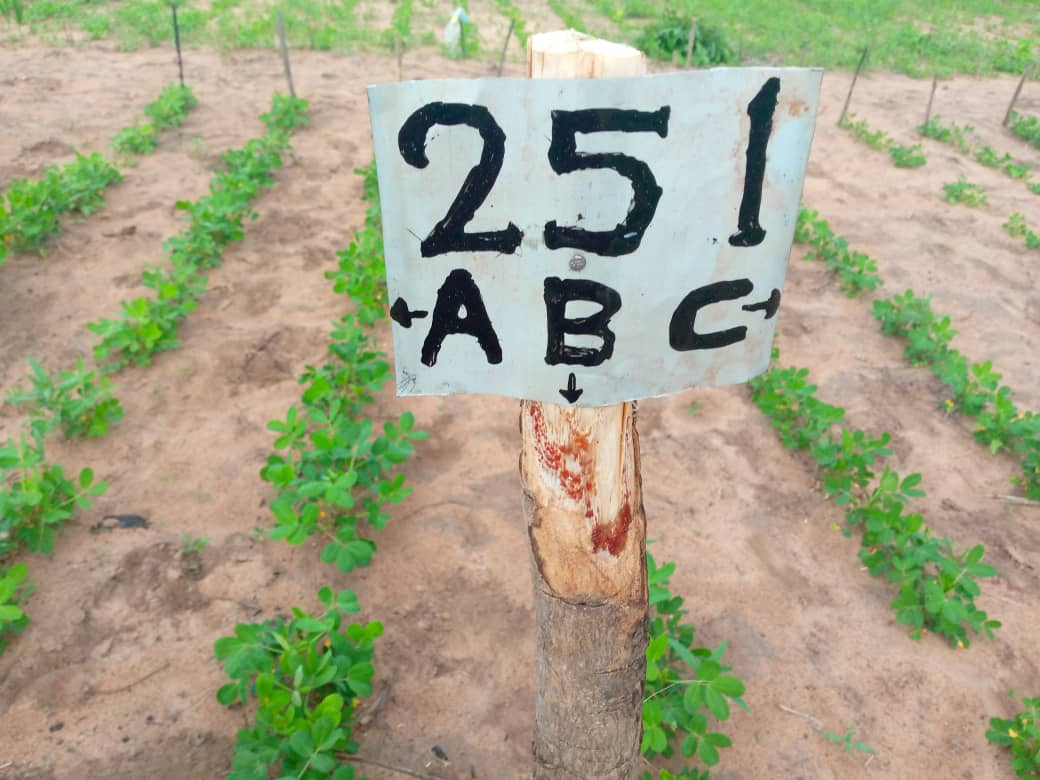
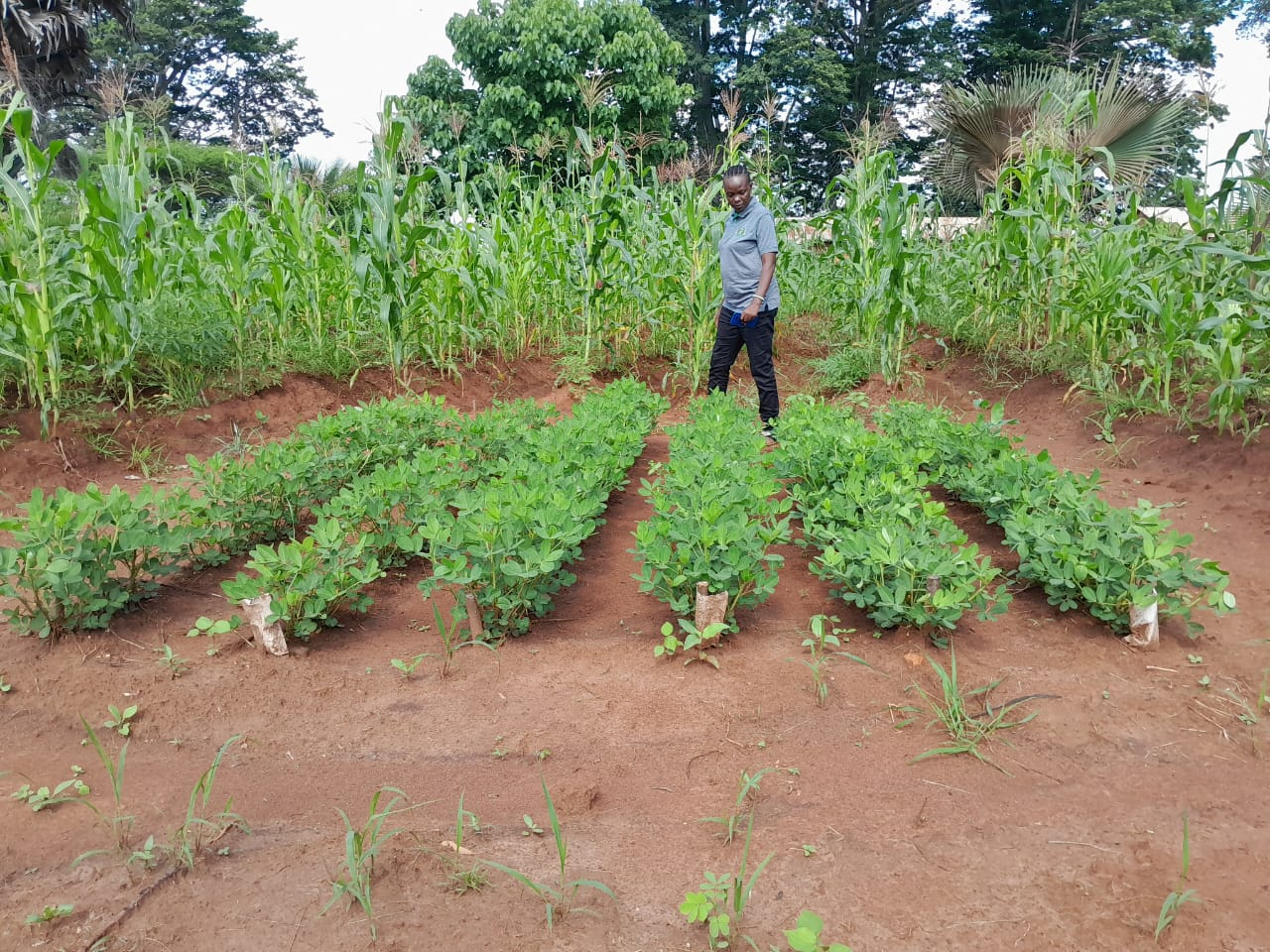
As a groundnut breeder at CIMMYT, Dr. Happy Daudi was looking for a better way to test new varieties on farmers’ fields—one that would give her robust data, real farmer feedback, and still be affordable. That’s when she turned to the tricot approach.
“Tricot gives us quality and robust data and is more cost effective than other methods for on-farm testing,” Happy explains. “Tricot also involves more farmers for better results.”
By design, tricot spreads trials across many farmers’ fields, rather than concentrating them in a few locations. This opens the door to more diverse conditions, more perspectives, and ultimately, better decisions.
What Tricot Taught Them
Happy and her team quickly learned that farmers’ willingness to participate is one of the most important ingredients for success. “When you come with a new and effective approach, they are more willing to participate,” she says.But involving many farmers also brings practical challenges. One major limitation is seed availability. To run tricot trials at scale, you need enough seed to supply all participating farmers. “If you want to involve many farmers, you need a lot of seed, and that can be a limitation, especially for crops with low multiplication rates.”
There were also language and cost issues. The ClimMob software platform used with tricot is only available in English, meaning that the agricultural extension officers had to work with farmers to translate it in local languages. Even so, the benefits to relationships with farmers are clear.“Tricot helps improve our engagement with the network of farmers and extension officers that participate,” she notes. Over time, that network becomes a strong foundation for future research and testing.
From Farmer Feedback to Varietal Release
One of the biggest impacts of tricot in Happy’s work has been on variety evaluation and release. “Tricot data helped us write a proposal for a varietal release,” she says. “Normally the farmer’s perspective is not well represented, but by collecting feedback from farmers via tricot we were able to develop a good product profile for groundnut.”
Instead of relying mainly on data from research stations, the team can now include what farmers actually prefer and experience in their own fields. That makes release proposals more relevant and more likely to lead to varieties that farmers will truly adopt.
New Insights: Genetic Gain and Market Segments
Tricot has also opened the door to new kinds of analysis.“With tricot, we can estimate on-farm genetic gain, which is important for research and breeding, and before tricot we could only do this with on-station data which was very different.” Testing varieties under real farm conditions helps reveal how they perform in the complexity of everyday agriculture—not just under controlled station environments.
Tricot also helps breeders understand market segments more clearly.“Tricot helped us group varieties according to market segment; for example, in Tanzania, farmers’ selection traits are different from zone to zone.” That means breeders can better match varieties to specific regions and farmer preferences, rather than assuming that one variety fits all.
Advice for Others Who Want to Use Tricot
If you’re considering tricot, Happy has some practical advice:
- Plan and organize carefully.“People must organize and plan well,” she says.
- Don’t be intimidated by the software.“Don’t worry about the software – it is easy to learn it.”
- Make sure you have enough seed.You need to know how many farmers you can realistically involve with the seed you have. “You need to multiply enough seeds for the trials so it is important to see how many farmers you can give seeds to with what you have.”
- Align trials with the growing season.Many farmers do not have irrigation, so timing is critical. “Keep in mind the trial needs to be according to the growing season as many farmers do not have irrigation.”
Is Tricot the Right Tool for Variety Evaluation?
For breeders, Happy’s answer is yes.“It is especially useful for breeders,” she says. “They can get more preference information than other approaches because tricot involves many farmers, who are the ones who would adopt the released varieties.” Tricot doesn’t just help estimate genetic gain—it also supports grouping varieties according to market segment and understanding who each variety is really for.
There are still challenges. Happy points out that the current methodology and software are stronger on qualitative data (like farmers’ rankings) than on quantitative data (like yield), and breeders need both. Improving how quantitative data are handled will make tricot even more powerful.Even so, her experience shows that tricot is a major step toward farmer-centered breeding—where farmers’ voices, preferences, and fields are at the heart of variety testing and release.
From Trials to Scale: How Tricot Guides Maize Variety Choices at One Acre Fund - Elyse Tuyishime
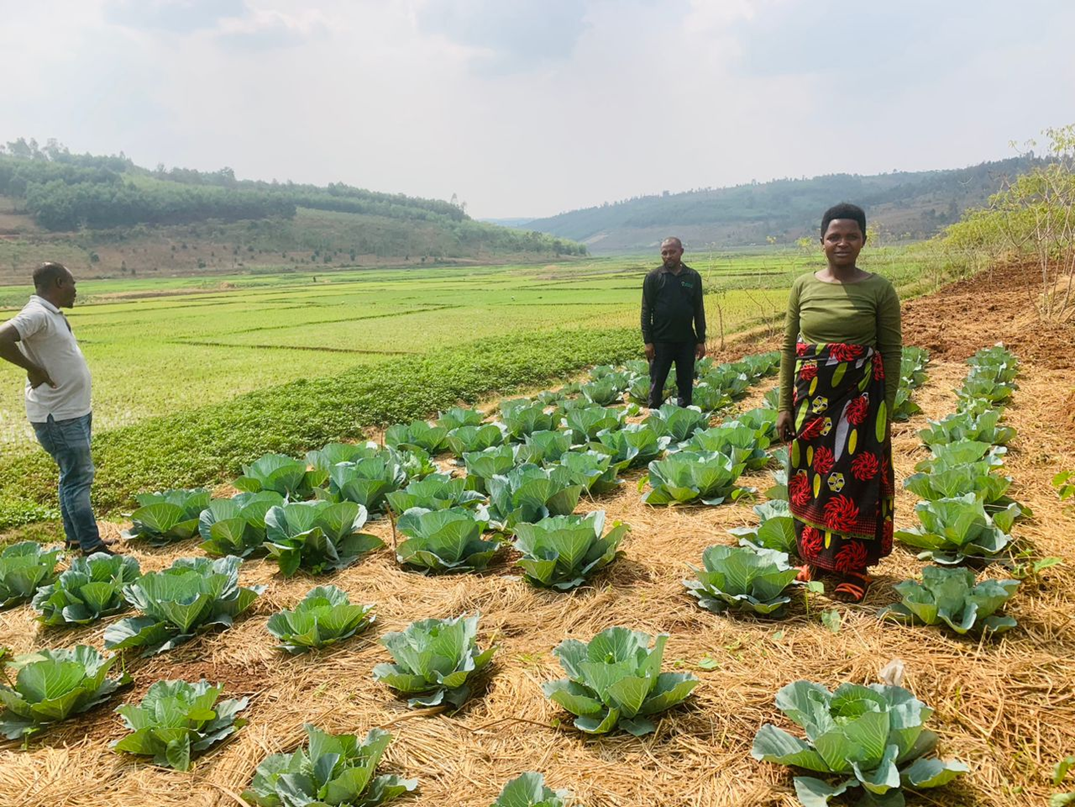
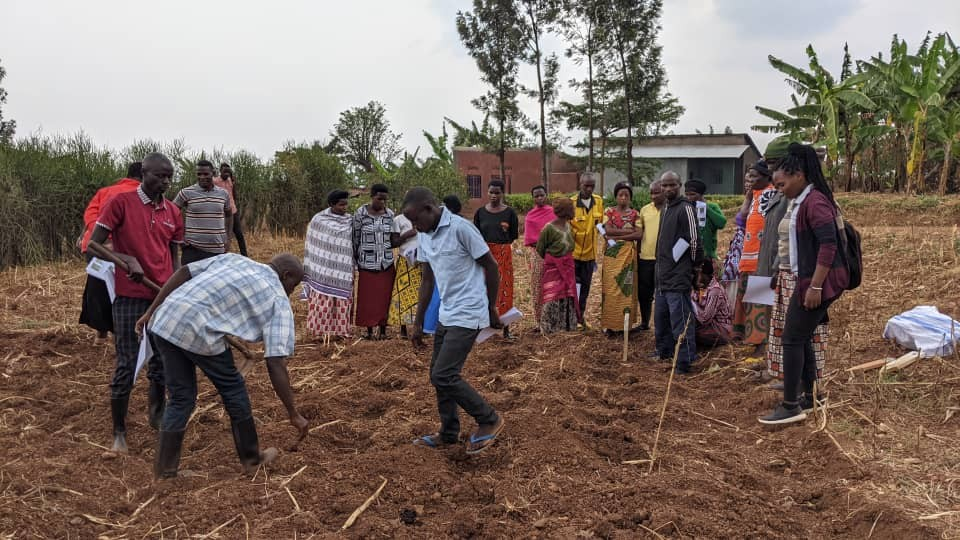
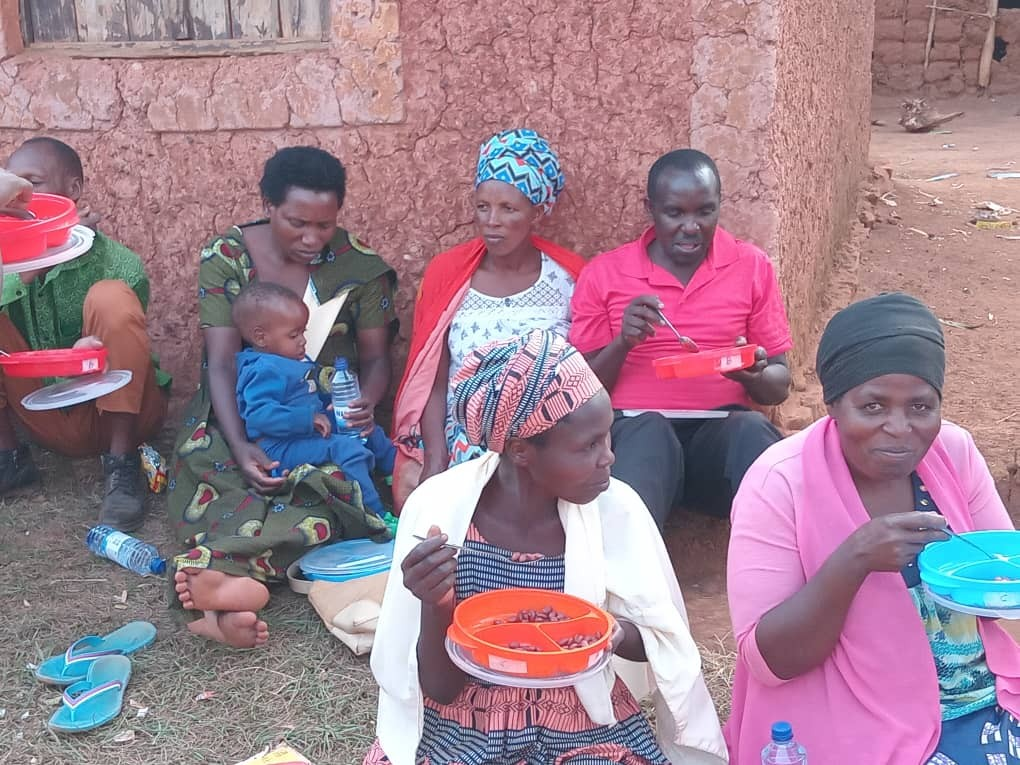
For Elyse Tuyishime and his team at One Acre Fund in Rwanda, the goal was clear: identify maize varieties with real potential to scale to farmers. With limited time and many candidate varieties, they needed an approach that could move quickly, involve farmers directly, and still generate reliable insights. They turned to the tricot approach.
Why Tricot?
Elyse and his colleagues chose tricot for three main reasons. First, it allowed them to test many varieties in a single season—up to 15 different maize varieties at once. This breadth is crucial when an organization wants to quickly pinpoint which options are worth investing in.
Second, by testing so many varieties at once, tricot helped them identify high-performing varieties faster and move more quickly toward scaling out the best options to farmers.
Third, tricot required less follow-up than other approaches. Compared to more traditional methods, it meant fewer visits to farmers and less time required to complete the trials, a major advantage for a field-based organization working across many communities.
What They Learned From Using Tricot
As they implemented tricot, Elyse’s team uncovered several important lessons. One of the most striking was the value of blind testing. When farmers did not know which variety was which, it reduced bias and sparked more curiosity about the results. Farmers were genuinely interested in seeing which varieties would come out on top.
They also discovered how reliable ranking data can be. The rankings farmers provided highlighted traits that drive real-world preferences—for example, maize grain size, which might be overlooked if the focus stayed only on yield. Farmers themselves appreciated how simple the tricot trials were. Many found the approach easy to follow and, as a result, were willing to participate in more than one tricot trial.
At the same time, the team realized that tricot is better suited to testing crop varieties than farming practices. When they tried to use tricot to test practices, such as different management techniques, the training required for farmers became more complicated, and the approach was less straightforward.
Supporting Better Decisions
Tricot has directly shaped decision making at One Acre Fund. Elyse notes that the approach has helped breeders refine their variety catalogues, because it highlights the traits that actually drive farmer preferences—again, grain size being a clear example.
Tricot also enabled the team to produce maps showing variety prioritization by zone. These maps indicate which varieties perform best and are most preferred in specific areas, making it much easier to target variety recommendations and support adoption in a more precise, zone-by-zone way.
Finally, tricot helped them filter down their options. Instead of being overwhelmed by many similar-looking varieties, they were able to narrow the list to one to three strong candidates with real potential to scale out to farmers.
Advice for Those Considering Tricot
Elyse recognizes that many people used to traditional approaches don’t immediately trust tricot. Ranking data can look less precise than standard measurements, and some teams are unfamiliar with how to analyze it. His message to them is clear: think of tricot as capturing farmers’ best choices.He points out that ranking data often reveals differences that traditional methods miss, and that farmers are capable of evaluating any trait, no matter how complex, if trials are designed well.
Tricot, he argues, can help breeders:
- Determine which traits are truly worth improving
- See whether new varieties are actually better than existing ones from the farmers’ point of view
In this way, tricot becomes a powerful bridge between breeding decisions and farmer realities.
A Tool for Evaluation and Marketing
Elyse also sees tricot as valuable beyond breeding trials—it is helpful for variety evaluation and marketing. Because it consolidates feedback from many farmers, tricot offers a breadth of perspective that is difficult to achieve with more traditional approaches. It also shows which traits farmers are already aware of and which traits may require more marketing and awareness-raising.
For organizations like One Acre Fund, this insight is essential, not only for choosing which varieties to promote, but also for shaping the messages and training that accompany them.
Challenges and Requirements
Tricot is not without its challenges. Elyse notes that the approach involves a series of sequential steps that cannot be skipped. This structure ensures the quality of the data but can sometimes make implementation feel complicated. In addition, tricot requires a dedicated field-based team to engage with farmers, manage trials, and support data collection.
Despite these demands, his experience in Rwanda shows that tricot can be a highly effective way to find the right maize varieties quickly, understand what farmers truly value, and support smarter, more targeted scaling decisions—all while keeping farmers’ voices at the center of the process.
Using Tricot to Hear Farmers’ Voices in Bean Breeding - Edith Kadege
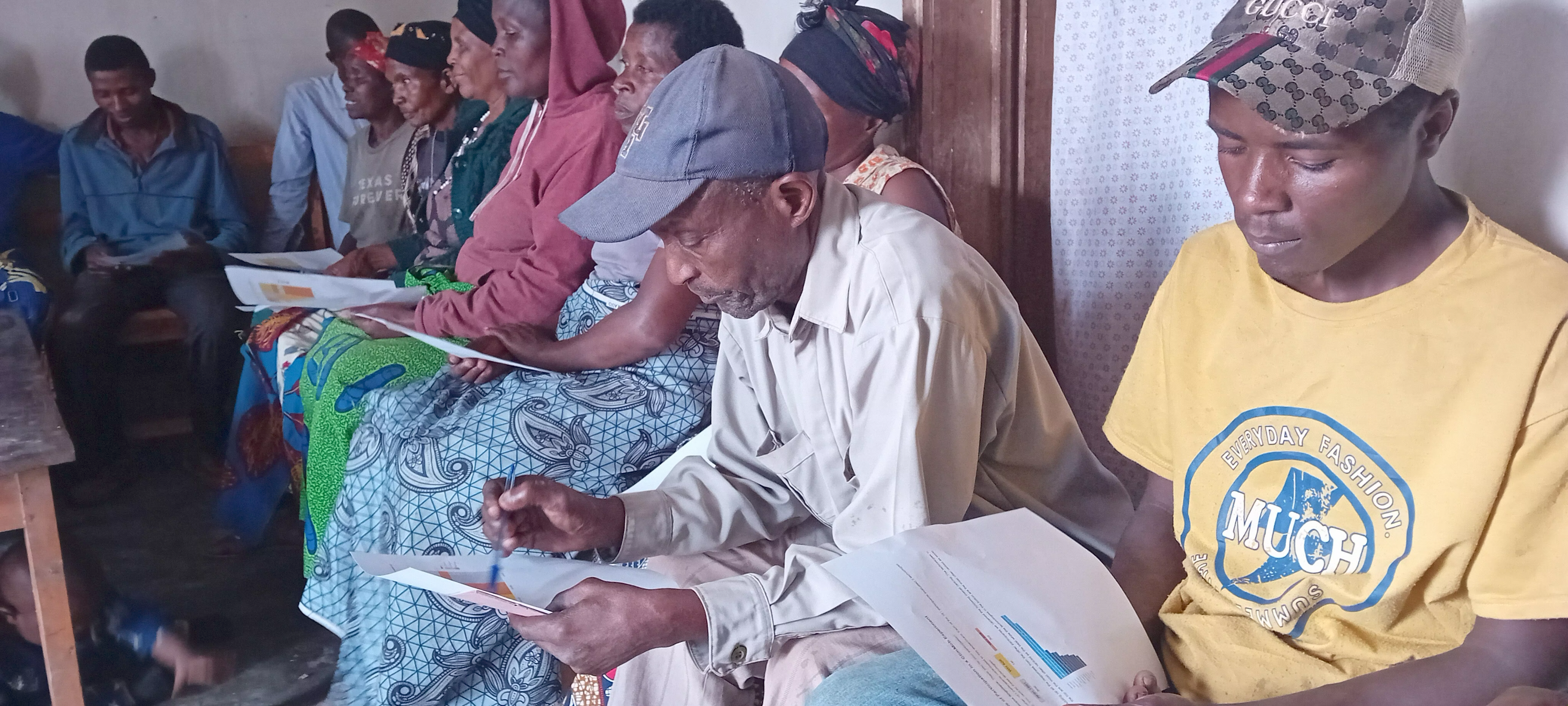
When Edith Kadege began her PhD research on common beans in Tanzania, she wanted to go beyond on on-station trials and really understand what farmers value in their bean varieties. Working with the Tanzania Research Institute (TARI), she chose the tricot approach as her main tool.
There were other participatory methods available, such as participatory varietal selection, but tricot offered clear advantages. It is simple for farmers to use and can involve large numbers of farmers across diverse environments. That wide involvement leads to more accurate, more representative assessments. Because tricot is based on ranking a small set of varieties, it can generate meaningful insights from relatively few trials. It also requires less time and effort from farmers, which has translated into higher participation and lower dropout rates in Edith’s work. On top of that, it is cost-effective, using fewer resources—time, materials and personnel—than many traditional methods.
Edith also appreciates that tricot reduces bias. In conventional group evaluations, farmers may be influenced by each other’s opinions and some traits may be overlooked. With tricot, farmers evaluate varieties in their own fields, leading to more honest and nuanced feedback.
What She Learned From Using Tricot
Through her tricot trials, Edith gained both practical and strategic lessons. First, she saw the value of instant data. Using tools like ODK, she could receive data as trials were ongoing, allowing her to detect errors and fix problems during the season instead of after it was over.
Second, she noticed that because tricot is inclusive, many farmers are already familiar with the varieties by the time they are released. This early exposure helps boost adoption rates, since farmers have already tested the varieties themselves.
New Insights on Beans, Disease and Preferences
The tricot trials delivered several important insights about common beans and the people who grow them. Edith and her colleagues realized the significance of anthracnose disease in common bean and observed that infection levels varied across agroecological zones. This highlighted a clear need for targeted disease management and resistant varieties.
In terms of traits, farmers consistently prioritized:
- High yield
- Market acceptance
- Disease resistance
However, tricot also surfaced other considerations that might not appear in standard trials. Farmers discussed cooking beans with banana and intercropping beans with other crops, underlining the importance of integrating cultural practices and farming systems into breeding priorities.
The approach also helped identify gender- and age-specific preferences:
- Women tended to focus on post-harvest traits such as storage and cooking qualities.
- Men emphasized agronomic traits, including field performance and plant characteristics.
- Youth often prioritized marketability and income potential.
For Edith, this showed that breeders shouldn’t treat “farmers” as a single, uniform group. Instead, they should first identify who the end users are—by gender, age and cultural context to design varieties that will truly be adopted.
Why She Recommends Tricot
From Edith’s experience, tricot is:
- Simple and practical
- Low-cost
- Able to involve many farmers across different environments
Because so many farmers test the varieties themselves, post-trial adoption rates tend to be higher—people already know how the varieties perform in their own fields.She believes tricot is very appropriate for variety evaluation and release. It generates enough data to show when a particular variety is high-performing and suitable for a range of conditions.Looking ahead, Edith argues that future research in Africa and beyond should use tricot more widely to promote new varieties and improve crop productivity, nutrition and income.
Challenges and Room for Improvement
Despite the benefits, there are challenges that Edith would like to see addressed, especially in the ClimMob platform that supports tricot. She and her team found it harder to collect and manage quantitative data, such as disease infection levels, and to integrate supplementary data. At present, the system is stronger on qualitative rankings than on numeric traits. But breeders also want to know: How much is “high yield”? How severe is disease infection? For Edith, improving the handling of quantitative data would make tricot even more powerful for breeding programs.
Even with these challenges, her experience with tricot shows how the approach can bring farmers’ voices and realities to the center of bean breeding—helping shape varieties that work not just in trials, but in the everyday lives and fields of Tanzanian farmers.
Letting Farmers Lead: How Tricot Is Shaping Maize Breeding at Bayer - Jamlick Mwathi
For Jamlick Mwathi and his team at Bayer Crop Science in Kenya, understanding farmers isn’t a “nice to have” – it’s central to how they design their maize breeding strategies. That’s why they turned to the tricot approach. “We use tricot because of the benefits you get from understanding your customer (farmer),” Jamlick explains. The insights they gain feed directly into breeding strategies and help identify gaps that need to be addressed in future products.
Lessons From Using Tricot
Working with tricot quickly challenged some long-held assumptions.Jamlick’s team had always placed yield at the top of their priority list. But the tricot trials revealed that farmers cared deeply about other traits too—especially grain size and grain colour. “Tricot gives insights on important traits, e.g. maize grain size and colour,” he says. “We always considered yield to be more important, so we were surprised at the results and have since integrated these attributes into our breeding program.” Tricot didn’t just confirm what breeders already thought; it reframed what “important traits” mean from the farmer’s perspective, and the breeding program was adjusted accordingly.
New Insights on Maize Preferences and Performance
The trials also brought some surprises when it came to variety choice. Jamlick and his colleagues were “amazed” to see farmers consistently choose a hybrid that the breeding team had not considered the best by their own internal criteria. Farmer rankings convinced them to bring that hybrid into the breeding program, rather than dismissing it. They also appreciated how tricot helped profile varieties with a micro-environmental focus. Two areas that the company had long treated as similar turned out to be quite different in terms of hybrid performance. “In this way, tricot helps you showcase your product in the best area for it,” Jamlick notes. Instead of assuming uniform performance across regions, they can now match hybrids to the environments where they truly excel.
Why He Recommends Tricot
For Jamlick, the value of tricot is clear: “With tricot you will get benefits that you cannot get with other methods.” In breeding, he stresses, companies need to appeal to the customer—the farmer. Tricot helps:
- Profile farmers’ needs and gaps
- Identify key challenges
- Point to what breeders can do to address those challenges
He believes tricot is not only useful for public breeding programs, but “very useful for seed companies” as well, because it aligns product development more closely with what the market actually wants. Jamlick also sees tricot as highly appropriate for variety evaluation and release. The information they obtained on grain size and colour “could not have come easily without tricot,” yet it significantly influenced how they modulated their maize breeding strategy. In his view, tricot “really informs breeders about the gaps that are not obvious.”
Challenges and the Way Forward
While his overall experience with tricot has been positive, Jamlick does see room for improvement—particularly on the software side. He notes that there were some technical issues when using the platform. However, these were resolved with the help of technical support and did not overshadow the broader value of the approach. For Jamlick and Bayer Crop Science in Kenya, tricot has become much more than a trial design—it’s a listening tool. By bringing farmer preferences and real-world performance to the center of maize breeding, it is helping shape products that fit farmers’ needs, fields, and markets far better than traditional, breeder-only approaches.
Reaching More Farmers With Less Effort: How Tricot Supports Sweetpotato Research at CIP - Reuben Ssali
For Reuben Ssali at the International Potato Center (CIP), the appeal of the tricot approach was immediate. He saw in it a way to reach many more farmers than traditional trials usually allow—and to do so in a way that was simple and inclusive, regardless of farmers’ education levels or resources. “I realized I would be able to reach many more farmers,” he explains, “and it is very easy to involve farmers regardless of their education level or resources.” With tricot, smallholder farmers take a central role in testing varieties on their own fields, ranking them according to their preferences and experiences. For Reuben, that meant more participation, more diversity of environments, and richer data for sweetpotato breeding.
Lessons From Using Tricot
Implementing tricot taught Reuben and his team some important practical lessons. The first was the critical importance of multiplication rate. If a promising variety doesn’t have enough planting material multiplied before the trial begins, it is very difficult to fix this problem later. “Multiplication rate of varieties is very important,” he notes. “If you start a trial and a variety is not well multiplied it is not easy to resolve.” Tricot also opened doors to new collaborations. It created opportunities to engage with researchers they did not usually work with—such as those responsible for seed multiplication—as well as agricultural extension officers, who were involved throughout the trial. On the digital side, the ClimMob software provided a strong backbone for the work, supporting everything from farmer registration to data collection.
However, one challenge remained: when farmers provided rankings, it was not always clear which trade-offs they were making. Understanding why a farmer preferred one variety over another—what traits they were prioritizing or overlooking—was not always straightforward. “When farmers made the ranking it was difficult to know what trade-offs they are making,” Reuben explains, “i.e. what traits they accept in the ranking.”
New Insights on Sweetpotato Traits
Before using tricot, the CIP team had already conducted surveys to understand which traits farmers wanted in sweetpotato varieties. They had a rough idea of priorities, but tricot allowed them to validate and refine that picture. “Implementing tricot allowed us to validate some traits,” Reuben says. “Trait preferences are more pronounced when farmers provide information about their rankings.” By looking at how farmers ranked varieties under real field conditions, preferences became clearer and more concrete. The trials also revealed an interesting nuance: some farmers were willing to ignore certain negative traits—such as mealiness in some varieties—if other qualities were strong enough. This kind of insight helps breeders understand not just which traits are important, but which trade-offs farmers are willing to accept.
Why He Recommends Tricot
Reuben describes the tricot approach as very practical for both farmers and researchers. He highlights how the ClimMob system supports the entire process, making it easier to implement the research and to give feedback to farmers at the end of the trial. That feedback loop strengthens trust and keeps farmers engaged in the research process. For Reuben, tricot is clearly appropriate for variety evaluation and release. Even simple rankings can quickly show the best and worst varieties, and the approach provides a valuable feedback loop for breeders:
- It can reveal why a released variety is being rejected in the field.
- It offers robust statistics that variety release committees appreciate.
In other words, tricot doesn’t just identify winners and losers; it helps explain them.
Challenges and Questions Still to Answer
Despite its strengths, Reuben sees one main challenge: understanding trade-offs more clearly. The rankings show which varieties farmers prefer, but not always exactly why—especially when a variety is liked despite some obvious negative traits.“Only challenge is not being able to quickly distinguish the trade-offs of good vs bad traits,” he says. “We would like to know why farmers appreciated varieties despite some bad traits.” Addressing this challenge—by combining ranking data with more detailed trait information and farmer feedback—could make tricot even more powerful for sweetpotato breeding and beyond. For now, Reuben’s experience at CIP shows that tricot is a highly practical, farmer-centered approach that expands reach, deepens collaboration, and offers breeders clearer signals about which varieties truly work for farmers and why.
Scaling Farmer Reach and Market Insight: How Tricot Supports Groundnut Breeding in Ghana - Richard Oteng-Frimpong
For Richard Oteng-Frimpong at the Savanna Agricultural Research Institute in Ghana, one of the biggest challenges in breeding is simple but stubborn: how do you get new breeding lines into the hands of enough farmers, in enough places, to really understand their value? The tricot approach offered a powerful answer. Richard was drawn to tricot because it allowed him to reach a larger number of participants and to distribute breeding lines to farmers who were previously inaccessible. Instead of testing a few lines in a small number of locations, he could involve many farmers directly in evaluating new material. The digital support behind tricot also mattered. With the ClimMob platform handling trial design and analysis, he found the process easy and simple to use, reducing the workload on the research team.
What He Learned From Using Tricot
Once implemented, tricot changed how Richard and his team worked.First, it expanded the scope of their trials. “Tricot allowed me to test more lines,” he notes—his current trial includes 15 different lines, far more than many conventional on-farm trials would handle. They also found that most participants were genuinely happy to test the material. Farmers appreciated having access to new lines and being part of the evaluation process. On the data side, using ODK for collection brought a major advantage: the data came in quickly and online, speeding up analysis and decision making. They no longer had to wait months for data entry and cleaning before seeing results. Tricot also encouraged new partnerships. Working closely with seed companies helped them see which varieties were accepted by the wider community, bridging the gap between experimental lines and market realities.
Logistics, Languages and Local Needs
Along the way, Richard’s team learned a lot about logistics and collaboration. Because trials took place across areas with multiple local languages, they needed field agents to translate and support data collection. These local partners played an essential role in ensuring that farmers could participate fully and that their feedback was accurately captured. The trials also confirmed that trait requirements vary between users. For example, they found that early-maturing varieties were especially preferred by female farmers, who often balance production needs with household responsibilities and risk management.
Shaping Decisions in the Breeding Program
The insights from tricot have fed directly into decision making in Richard’s breeding program. The results help shape target product profiles, clarifying which traits should be prioritized. Among the key findings were the importance of seed size and colour, as well as fast maturity—the latter being crucial to help crops escape environmental stresses. By disaggregating the data, they could see which traits mattered most to which groups, such as the stronger emphasis on early maturity from female farmers. That level of detail makes product profiles more accurate and more responsive to real farmer needs.
Why He Recommends Tricot
For researchers considering tricot, Richard’s advice is straightforward. He describes the approach as very simple and cheaper than many other methods. With ClimMob assisting in trial design and ODK enabling real-time data collection, tricot saves scientists a lot of time. It also makes it possible to work with large numbers of farmers, which in turn supports more robust decisions than those based on smaller, more controlled trials alone. Because tricot allows researchers to reach many people with a large number of breeding lines, Richard sees it as an excellent source of market intelligence. It helps breeding programs design varieties that are better tailored to the market, increasing the likelihood of wide adoption. In his view, every breeding program should consider using tricot, because it provides feedback that helps ensure new varieties don’t just perform well in trials—they are also wanted and used by farmers.
Challenges and How to Address Them
Richard’s experience also highlights some challenges that come with the approach. Working on groundnuts, one major issue was seed requirements. Running large tricot trials meant they needed a lot of seed, forcing the team to multiply seed during the off-season to be ready. Language diversity posed another challenge. With multiple languages spoken across the study area, they relied on field agents to translate farmers’ feedback. Richard notes that if more farmers could use the ODK app themselves, they could send data directly, reducing the need for translation and speeding up the process even further. Despite these hurdles, his experience shows that tricot is a practical, scalable, and farmer-centered approach—one that not only broadens participation in groundnut breeding, but also sharpens understanding of what the market really wants, and why.
Aligning Breeding With Farmer Demand: How Tricot Is Reshaping Cowpea Work at IITA - Patrick Ongom
For Patrick Ongom at the International Institute of Tropical Agriculture (IITA) Nigeria, it became clear that traditional approaches to on-farm testing weren’t giving the full picture. They were limited in scale, slow in delivering results, and often difficult to integrate smoothly into the breeding pipeline. That’s when his team decided to adopt the tricot approach. Tricot appealed to Patrick because it mimics normal experimental design in research, making it easier to fit into the existing breeding process. With tricot, decisions can still be made on the basis of solid statistics, but the approach also allows trials to cover large numbers of farmers for more representative data on varietal performance. He also appreciated how data is captured, summarized and stored. Compared to some traditional methods, tricot’s digital tools made the whole process more efficient and easier to manage.
Lessons From Getting Started
As they rolled out tricot, Patrick and his team learned that the method itself is not complicated—once people understand it. “We learned that once you understand the process it is simple, and it was successful,” he notes. However, they also discovered that field agents play a critical role. When agents were not well trained, technical issues could arise, especially around the use of software and data capture. This led to a key lesson: at the beginning, there needs to be strong supervision and monitoring of field agents to make sure they are comfortable with the tools and protocols. A bit more support early on helps avoid bigger problems later.
Building Partnerships on the Ground
Using tricot also helped Patrick’s team strengthen logistics and partnerships in cowpea-growing areas. They built important connections with farmer groups, field extension agents, and local government officials—all of whom are crucial for promoting cowpea and taking new varieties to both farmers and consumers. These partnerships go beyond a single trial season. They create a supportive network that can help move improved varieties from experimental plots into real-world use.
New Insights on Cowpea Preferences
One of the most valuable outcomes of the tricot trials was a clearer view of which cowpea traits truly matter to farmers. Through the ranking data and feedback, Patrick and his team found that farmers placed particular importance on:
- Grain colour
- Seed size
- Resistance to pests and diseases
These insights allowed IITA to adjust product profiles and breeding priorities, ensuring that these traits are properly captured in new lines. Importantly, the results from tricot also fed directly into variety release decisions. The data helped identify which candidate varieties should be advanced and released, not just based on breeder criteria, but on the preferences and experiences of farmers themselves. Tricot has also guided IITA to restructure the cowpea breeding pipeline so that it aligns better with market classes. That shift is moving the program in the right direction—toward breeding for consumer- and farmer-demanded traits, rather than only researcher-defined targets.
Why He Recommends Tricot
For others considering the approach, Patrick describes tricot as a powerful and useful technology. From the farmers’ perspective, it is easy to work with: they have only three varieties to score in each mini-trial, which keeps the task manageable and reduces fatigue. From the breeders’ perspective, tricot is equally attractive:
- Data access is instant, thanks to digital tools,
- Results are easy to summarize using functions in the software,
- It is easier to scale out and work with large numbers of farmers,
- The approach is not constrained by small sample sizes.
Compared to traditional methods, tricot offers a way to combine experimental rigor with farmer reach and practicality.
A Role Across the Breeding Pipeline
Patrick is convinced that tricot is appropriate for variety evaluation and release—and not just at one point in the breeding cycle. “Tricot can be instrumental in several stages in the breeding program,” he explains. For cowpea, IITA is using tricot at later stages, once materials have already been tested in more controlled environments. At that point, tricot provides farmers’ opinions on near-final varieties. At the same time, they have also used tricot in earlier development stages, showing that the approach can be flexible and integrated at multiple points to refine decisions.
Challenges and Opportunities for Improvement
Like any system, tricot comes with some challenges.On the user side, Patrick’s team sometimes encountered duplicate entries from the same farmer. Fortunately, there is an option in ClimMob to fix such errors, but it highlighted the need for better mechanisms to catch and correct common mistakes in the field. Patrick also notes that familiarity with the tools matters. The more comfortable field agents and researchers are with ClimMob and data collection apps, the better the quality of the results. Even with these issues, his experience suggests that the benefits far outweigh the challenges. Tricot has helped IITA engage more farmers, clarify trait priorities, guide variety release decisions, and align the cowpea breeding pipeline with real market demand. For Patrick Ongom, tricot isn’t just another trial design—it’s a way to bring farmers’ voices and preferences directly into the heart of the breeding process.
Bringing New Varieties to Isolated Farmers: How Tricot Supports Seed Sector Development - Mohammed Hassena
For Mohammed Hassena, working with Integrated Seed Sector Development (ISSD), one challenge stood out: many farmers in isolated areas simply don’t have access to the varieties promoted through formal extension programs. These farmers are often left behind when new varieties are introduced, even though they may need them the most. That’s why Mohammed and his team decided to use the tricot approach. Tricot offered a way to reach farmers in remote locations and put new varieties directly into their hands. Instead of expecting farmers to come to demonstration plots or rely solely on extension agents, tricot brings the trial to the farmer’s own field.
Learning That Tricot Is Easier Than It Looks
At first, Mohammed and his team assumed tricot would be a complex process—especially when working across many communities and landscapes. But once they began, they discovered that it was more straightforward than expected, largely because they established partnerships with local people. By working closely with local partners, they were able to include many farmers across different areas and manage the logistics more easily than a centralized trial system would allow. There were some early struggles with data collection: staff initially had difficulty handling parts of the digital process. But these issues turned out to be manageable and were easily solved within the software, underscoring the importance of training and support rather than being a fundamental barrier to using tricot.
Farmers’ Enthusiastic Participation
One clear success of the tricot trials was the enthusiasm from farmers themselves. Mohammed notes that farmers were very interested in the trials, largely because of the range of different varieties they were able to evaluate. Having access to multiple options, some of which they had never seen before, generated curiosity and engagement. Farmers were happy to give their answers, share their rankings, and discuss what they liked and didn’t like. This willingness to participate is crucial—not only for collecting good data, but also for building familiarity and trust around new varieties.
Insights From On-Farm Trials in Low-Service Areas
The on-site tricot trials provided especially valuable insights in areas where variety choice and extension services are limited. In such places, Mohammed found that tricot was an excellent and simple way to introduce new varieties, while simultaneously seeing which ones farmers preferred. Instead of top-down recommendations, the process let farmers experience the varieties themselves and express their preferences through rankings. However, he also identified a potential tension when it comes to private companies testing existing varieties. If farmers’ feedback is not favorable to varieties that are already released, companies might find it difficult to accept those results. This may lead to some reservation from private companies about using tricot, especially if it challenges their current product lineup.
Advice for Companies Wanting to Use Tricot
Despite these tensions, Mohammed sees strong reasons for seed companies and other actors to adopt tricot. For companies that want to target a specific area, tricot is, in his view, one of the best ways to identify new varieties that farmers truly like. It allows companies to see which varieties stand out in the eyes of local farmers and in real local conditions. For companies that are testing already released varieties, tricot also has clear benefits: it can help promote those varieties, increase awareness, and build farmer confidence in them. However, Mohammed highlights one important point of caution: naming varieties. During trials, farmers often give varieties their own names. If a company later releases the same variety under a completely different name, it can create confusion. Farmers may not realize that the variety they liked in the trial is the same one now being marketed under another name. His advice: companies should take care with naming, and where possible, build on the names farmers already know, or at least make the link clear.
Tricot as a Tool for Variety Introduction
Mohammed is convinced that the tricot approach is well suited to variety introduction. “If you include a variety in tricot, farmers will already know it,” he explains. When that variety is eventually released, adoption rates are likely to be higher, because farmers have already tested it in their own fields, seen how it performs, and formed an opinion about it. This familiarity reduces risk for farmers and speeds up the transition from trial to widespread use.
Challenges and How to Overcome Them
Tricot does come with some perceived challenges—especially at the planning stage. When someone first considers targeting a large number of farmers, the approach can feel logistically demanding and expensive. Mohammed’s experience, however, is that these worries are often greater in theory than in practice. By partnering with local people, they found that the process was actually manageable and efficient, even across remote areas. Local partners helped with coordination, communication, and farmer engagement. Another issue is what happens when farmers multiply the varieties themselves. Rather than seeing this as a problem, Mohammed views it as part of promoting the varieties. Farmer-led multiplication can help spread promising varieties more widely and quickly, as long as quality is monitored.
Overall, Mohammed's experience with tricot under Integrated Seed Sector Development shows how the approach can:
- Extend the reach of new varieties into isolated farming communities,
- Generate enthusiastic farmer participation,
- Provide honest feedback that both public and private actors can learn from, and
- Lay the groundwork for higher adoption rates when varieties are finally released.
For organizations serious about inclusive variety introduction and real farmer input, tricot offers not just a methodology, but a pathway to make sure no farmer is left out simply because of where they live.